Reduce Your Electric Bill With Solar. Connect With a Local Installer Today.
Paying over $100/month in electricity? Homeowners with low-shade roofs are switching to solar and cutting their energy costs significantly. Connect with a licensed solar installer near you.
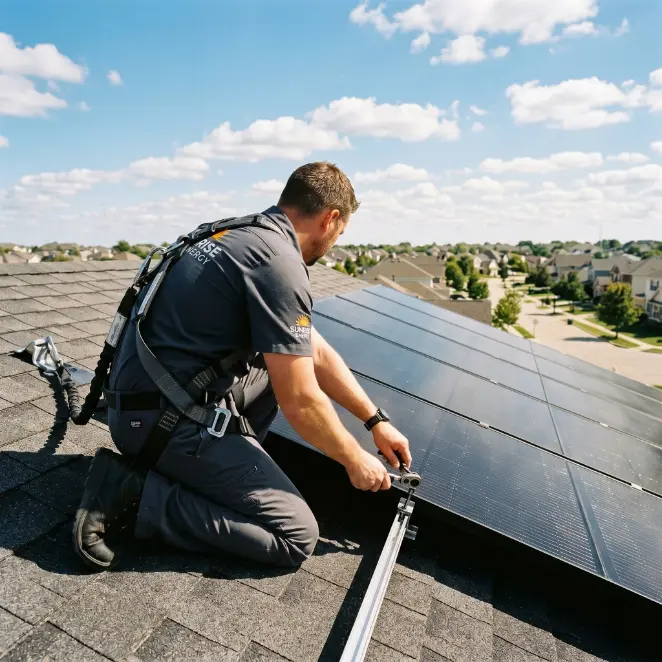
The federal solar Investment Tax Credit (ITC) covers 30% of installation costs — but tax policy can change. Homeowners acting now lock in the current rate.
Before you call
Is Your Home a Good Candidate for Solar?
Solar makes the most financial sense for homeowners who meet a few conditions. If these describe your home, you're a strong candidate for residential solar installation near you.
Single family home with your own roof
Solar installation requires ownership or long-term control of the roof. Single family homeowners are ideal candidates. If you own your home and your roof, you qualify for residential solar installation near me.
Low shade or no shade on your roof
Solar panels need direct sunlight for most of the day to produce meaningful energy. If your roof gets good sun exposure from late morning through late afternoon — with minimal shading from trees, chimneys, or neighboring structures — your home is a strong solar candidate.
Electric bill over $100/month
Solar makes the most financial sense for homeowners with higher electricity usage. If your monthly power bill exceeds $100, the savings from solar panels near me are substantial enough to generate a strong return on investment over the system's 25+ year lifespan.
You don't already have solar
If your home doesn't currently have a solar system installed, you're eligible for new residential solar installation including the full federal Investment Tax Credit and any applicable state incentives.
What we connect you with
What's Included in a Solar Installation
One call connects you with a licensed solar installer who handles your project end to end — from roof assessment and system design through grid connection and optional battery storage.
Home Assessment & System Design
A licensed installer evaluates your roof condition, orientation, shading, and current energy usage to design a system sized correctly for your home. Proper sizing is the difference between a system that covers your bill and one that falls short.
Solar Panel Installation
Panels are mounted on your roof using a weatherproof racking system that doesn't compromise roof integrity. Wiring runs to an inverter that converts DC solar power to AC for home use. Installation typically takes one to three days.
Inverter & Grid Connection
The inverter converts solar energy into usable household electricity. Grid-tied systems connect to your utility for net metering — excess power your home produces goes back to the grid, credited to your bill. Permits and utility interconnection are handled by the installer.
Battery Backup Storage
Add a home battery system to store excess solar energy for use at night or during outages. Solar with battery backup near me provides energy independence and protection from grid failures — increasingly popular in areas with frequent outages or high time-of-use utility rates.
How it works
Solar Installation in 3 Steps
Call Now
Tell us about your home — location, approximate monthly electric bill, and roof type. A live dispatcher connects you with a licensed solar installer near you.
→Site Assessment Scheduled
A licensed installer visits your home, evaluates your roof and energy usage, and designs a system sized for your needs.
→Installation & Activation
Panels installed, permits pulled, utility interconnection completed. Your system is activated and you start generating your own electricity.
Why homeowners choose us
Why Choose LocalHomeRequest
Good to know
Frequently Asked Questions — Solar Installation
Is solar worth it for my home?
How much does solar installation cost?
How does the federal solar tax credit work?
How many solar panels do I need?
How long does solar installation take?
What happens to my solar panels at night or on cloudy days?
How long do solar panels last?
Licensed installers near you
Ready to Cut Your Electric Bill? Connect With a Local Solar Installer Now.
Licensed residential solar installers near you — system design, installation, and tax credit guidance.
(888) 555-0199CALL NOW — Free to use · Licensed installers · No obligation